Everything we do to a piece of pipe.
Seven processes in one Calgary facility, so a bend can be formed, heat treated, blasted, machined, coated and documented without leaving the site.
Benpro provides induction pipe bending to 36" OD, cold pipe bending to 20" OD, rolling and draw bending, post-bend heat treatment to 680 °C, liquid epoxy coating, steel grit blasting and CNC bevel machining, all at one facility in Calgary, Alberta, serving Canada and the United States including Alaska. Work is performed to CSA Z245.16, CSA Z245.17, CSA Z245.30, CSA Z662, ASME B16.49, ISO 15590-1 and PFI ES-24.
What we can bend, and to what.
The numbers, in one table. If your job sits outside these ranges, tell us anyway. The boundaries move with material, wall and geometry.
| Process | Size range | Radius | Angle | Materials | Codes |
|---|---|---|---|---|---|
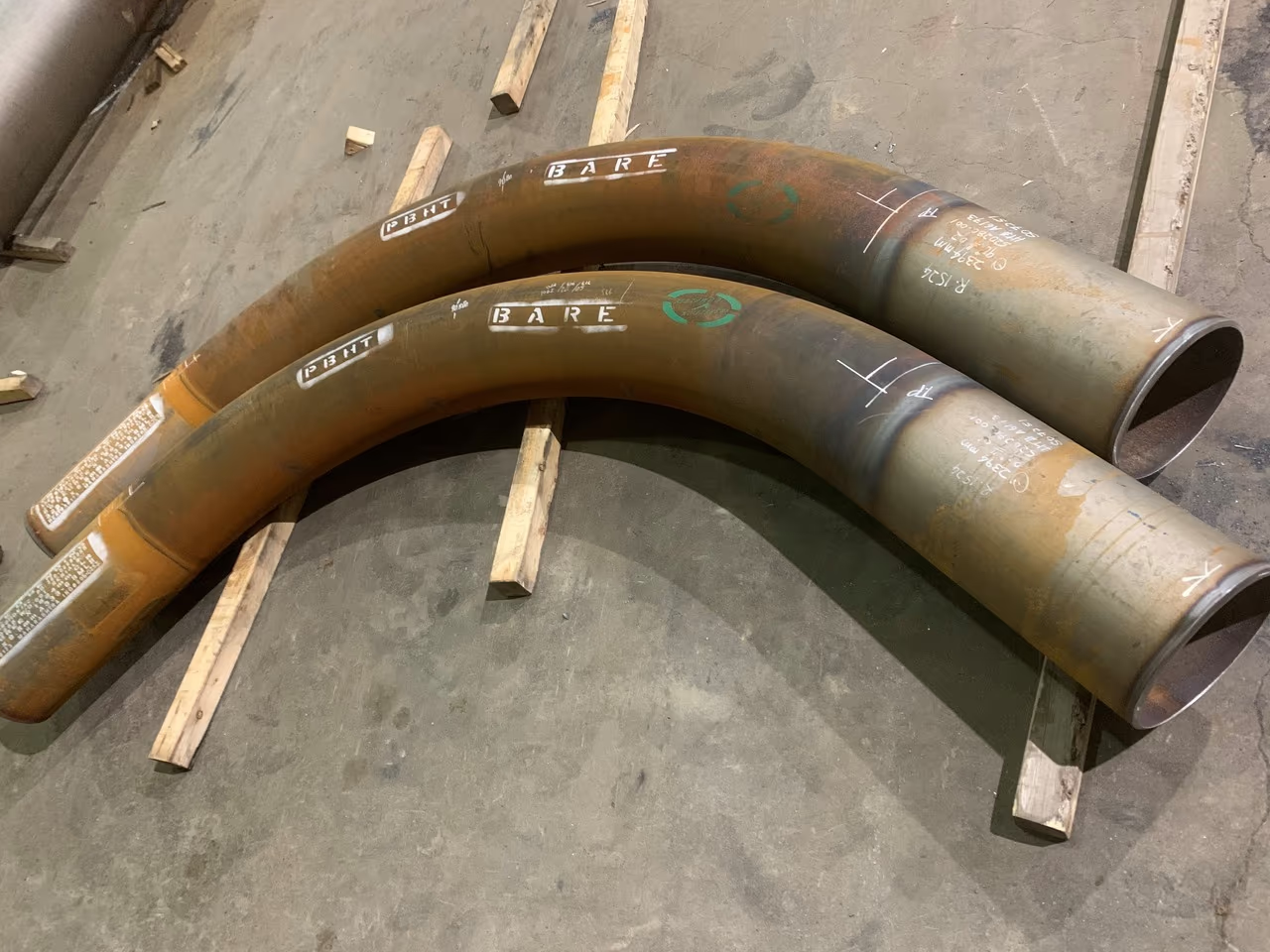
| Induction bending | Up to 36" OD | Up to 10 m; tighter radii than cold bending | Up to 180° | Carbon steel, stainless steel and alloys | CSA Z245.16 · ASME B16.49 · ISO 15590-1 · PFI ES-24 |
| Cold pipe bending | Up to 20" OD | Typically 10D and above; max limited by pipe length | Up to 180° | Carbon steel; YJ, YJ2K, UBRA and FBE coated pipe | CSA Z245.17 · ISO 15590-4 · PFI ES-24 |
| Rolling & draw | I-beams, H-beams, channel, angle, flat bar, round bar, HSS, pipe and tubing | Large-radius rolling; project-specific | To drawing | Carbon steel, stainless steel, aluminium, brass and copper | PFI ES-24 · CSA Z245.17 |
| Heat treatment | Furnace 5.4 × 3 × 3.6 m | n/a | n/a | Carbon steel and stainless steel | Max 680 °C |
| In-house coating | Temperature-controlled booth | n/a | n/a | Liquid epoxy: Denso Protal 7200, SP-2888 | CSA Z245.30 |
| Blasting | 1 manual booth, 2 automated enclosed machines | n/a | n/a | Steel grit, closed-loop recycled | SSPC standards, SP6 and SP10 finishes |
| CNC machining | CNC boring mill | n/a | n/a | Bevels, standard and counterbore transitions, Victaulic grooves | CSA Z662 |
Equipment: 2 induction machines · 2 cold decks · 1 manual blasting booth · 2 automated blasting machines · 1 heat treatment furnace · CNC boring mill · dedicated destructive testing lab co-located with the plant.
Induction, cold, or rolled?
Most buyers arrive knowing the outcome they need rather than the process. This is the short version of the conversation we have on the phone.
Choose when
Induction bending
- You need a tighter radius than a cold bend can achieve
- The diameter is greater than 20 inches
- The wall is too thin and would ripple in a cold bend
- You need an S-bend or true three-dimensional geometry
- Your specification requires it
Choose when
Cold pipe bending
- The radius is generous, typically 10D and above
- Diameter is 20" OD or smaller
- The pipe is already coated
- You want long sweeping bends limited only by pipe length
- CSA Z245.17 is the governing standard
Choose when
Rolling & draw
- The member is an I-beam, H-beam, channel, angle, flat bar, round bar or HSS
- You need a large, sweeping architectural radius
- The finished part will be visible to the public
Pick the process.
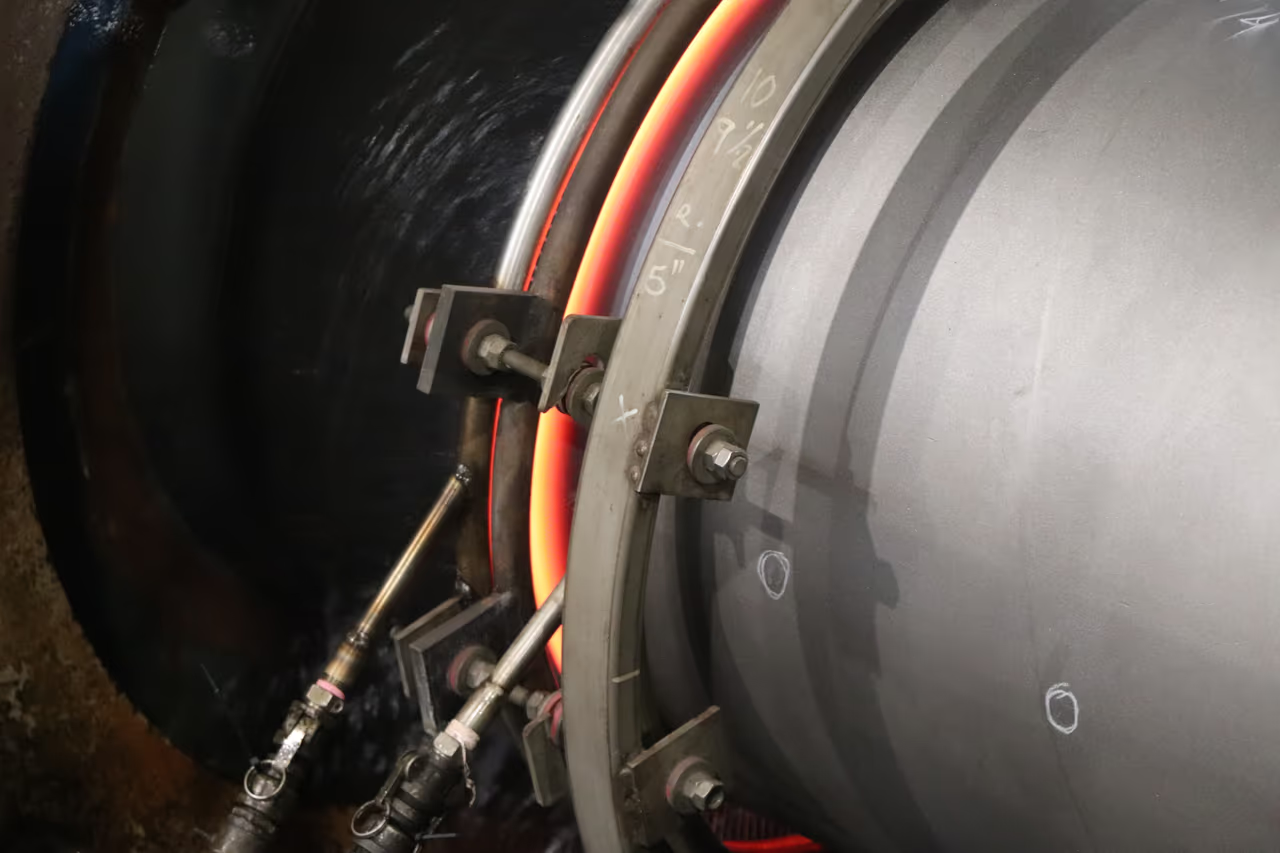
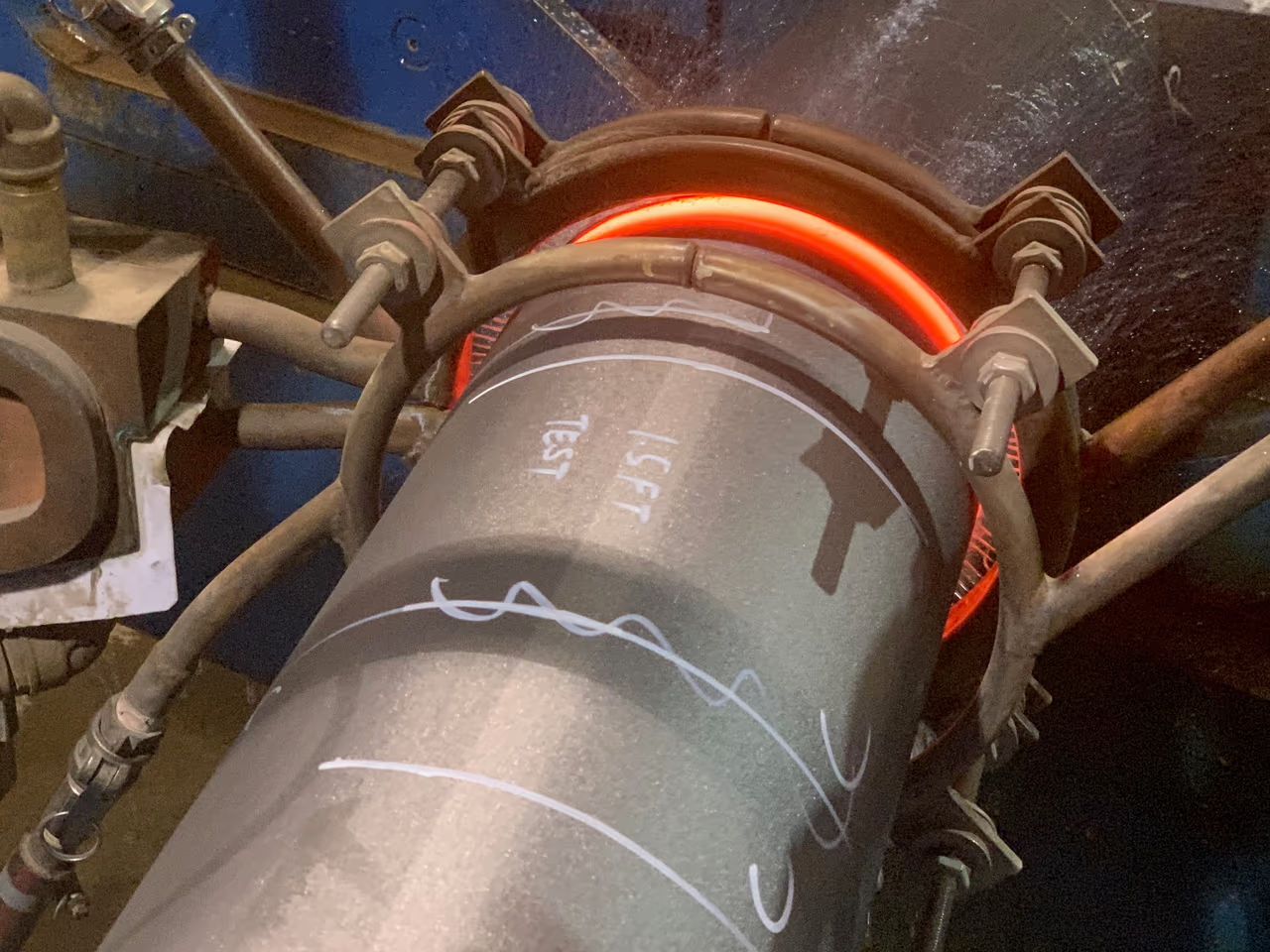 Induction Bending
36" OD · 10 m radius · 180°
Two induction machines. Carbon steel, stainless steel and alloys, including S-bends and complex 3D geometry.
Explore →
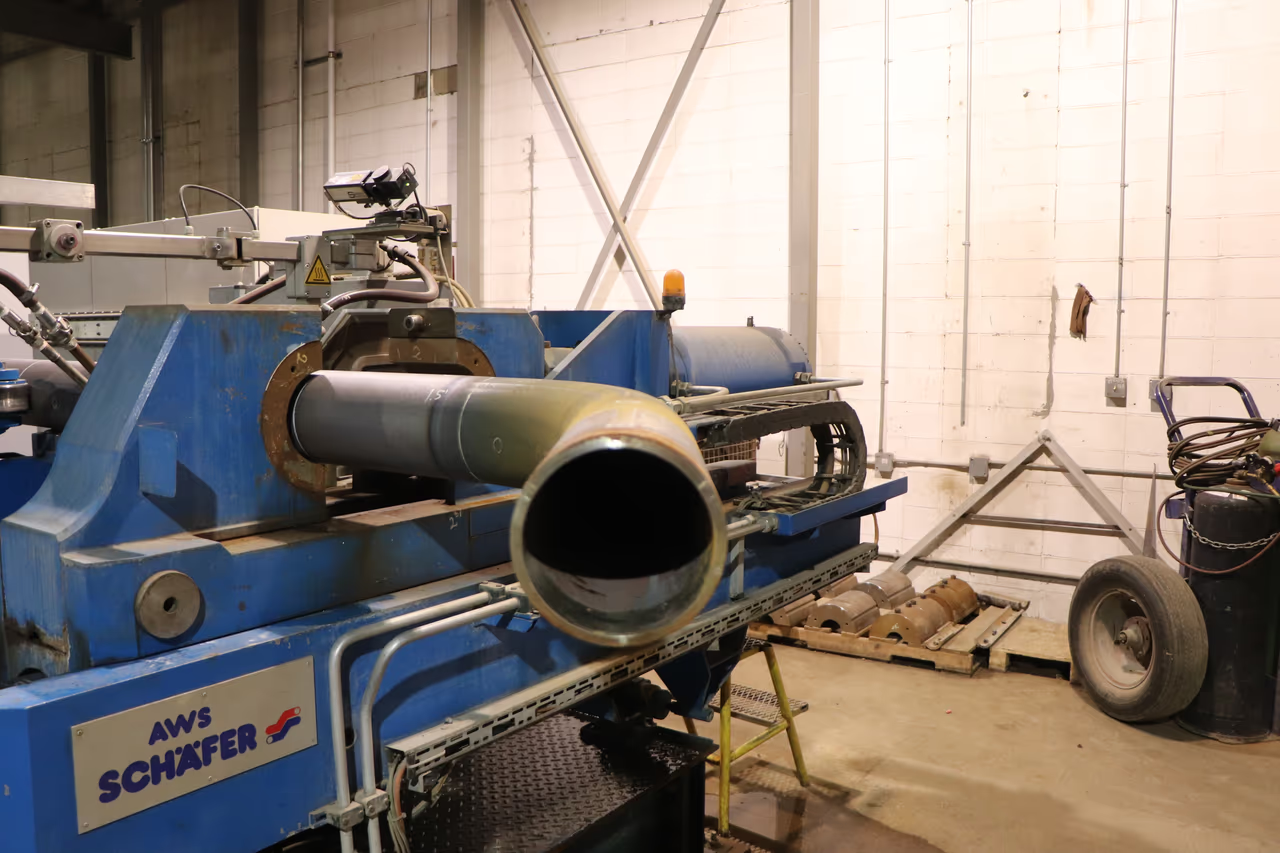 Cold Pipe Bending
20" OD · coated pipe · 180°
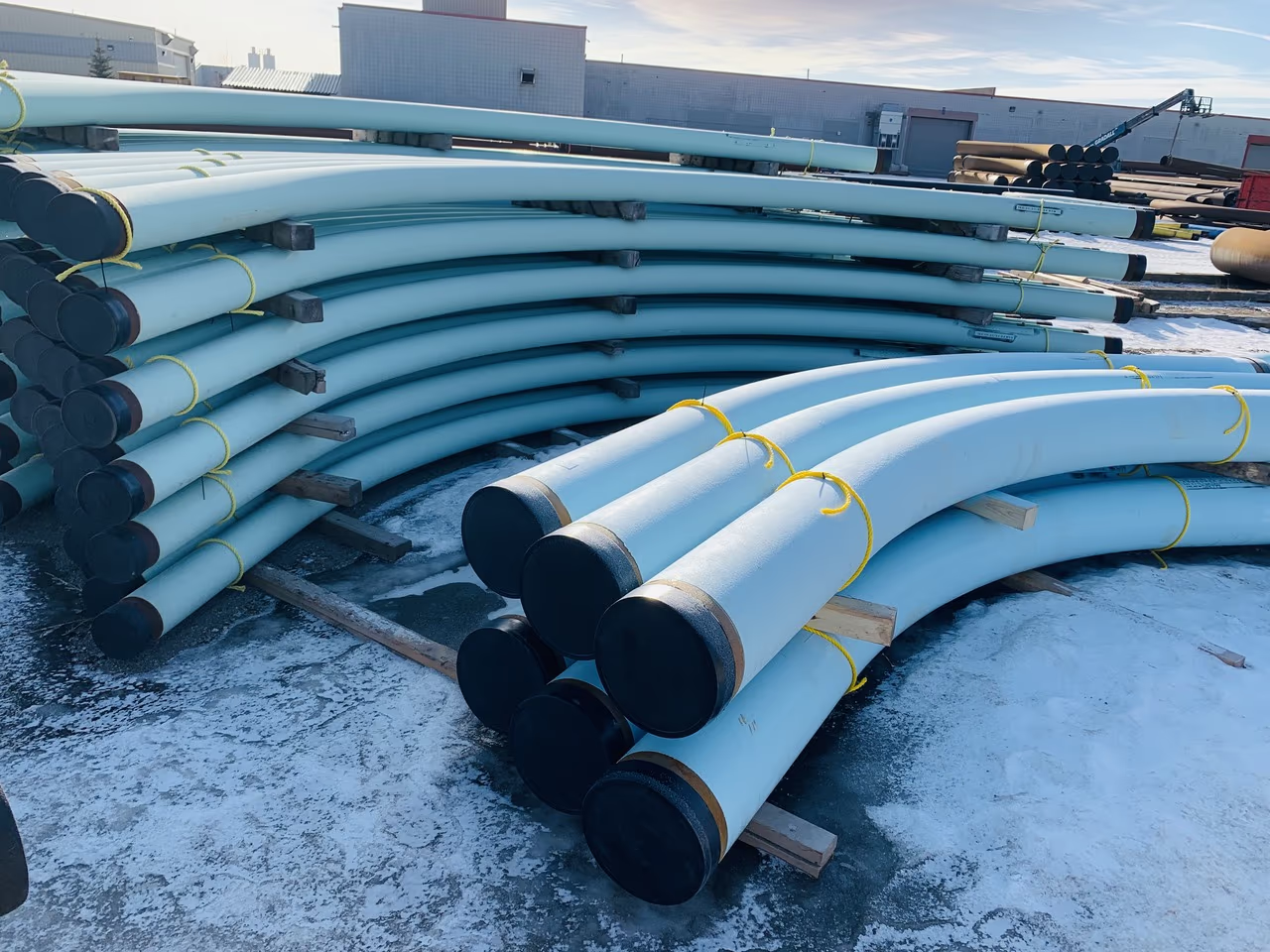
Two cold decks running YJ, YJ2K, UBRA and FBE coated pipe to CSA Z245.17.
Explore →
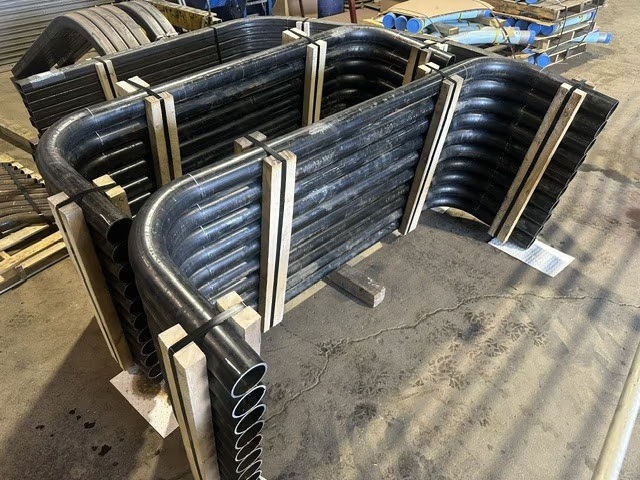 Rolling & Draw
HSS · I-beams · channel · angle · round bar
Rolling and draw bending of structural sections for architectural and civil work.
Explore →
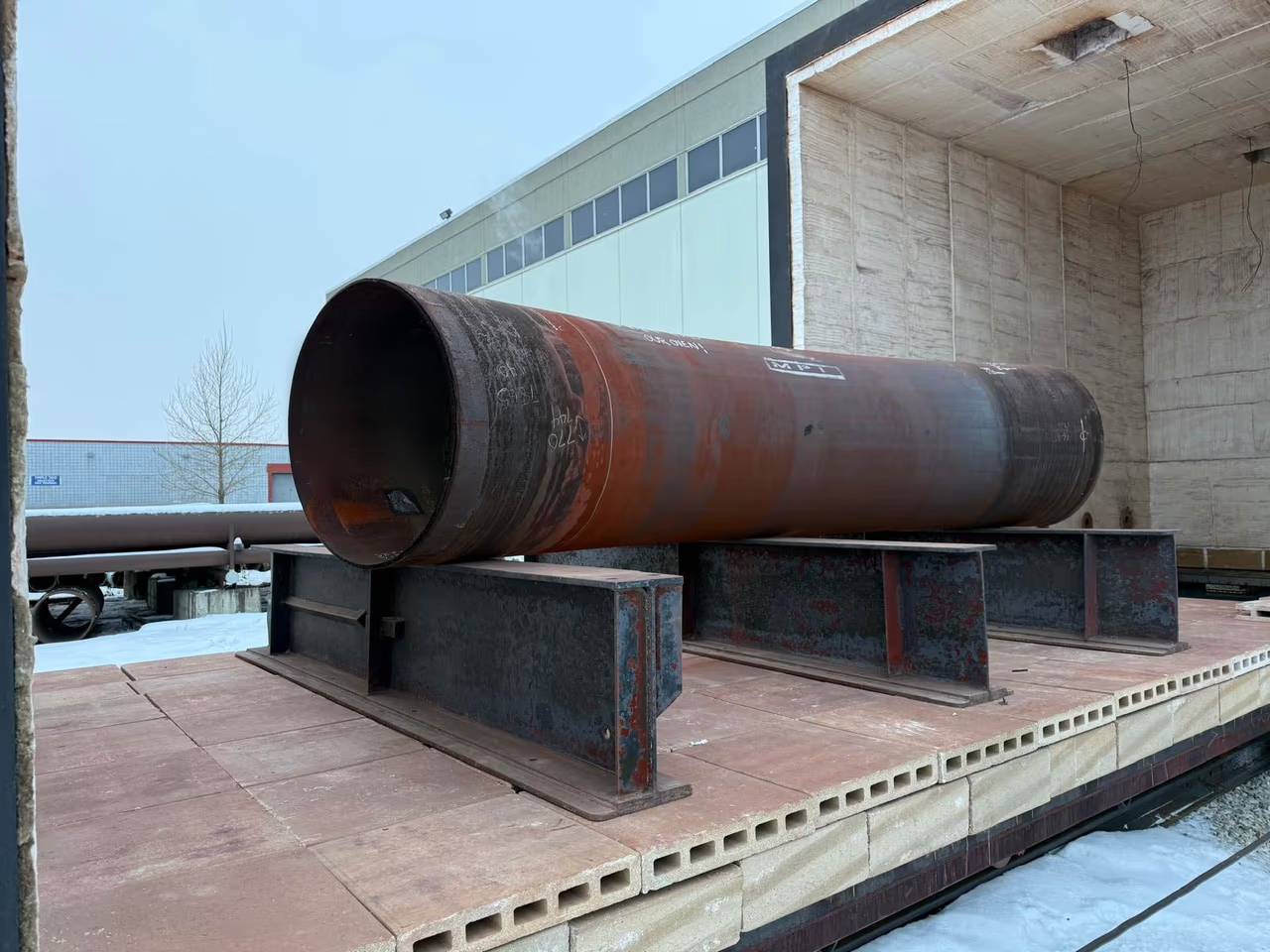 Heat Treatment
680 °C · 5.4 × 3 × 3.6 m
Post-bend heat treatment, and one of the services we actively take on standalone.
Explore →
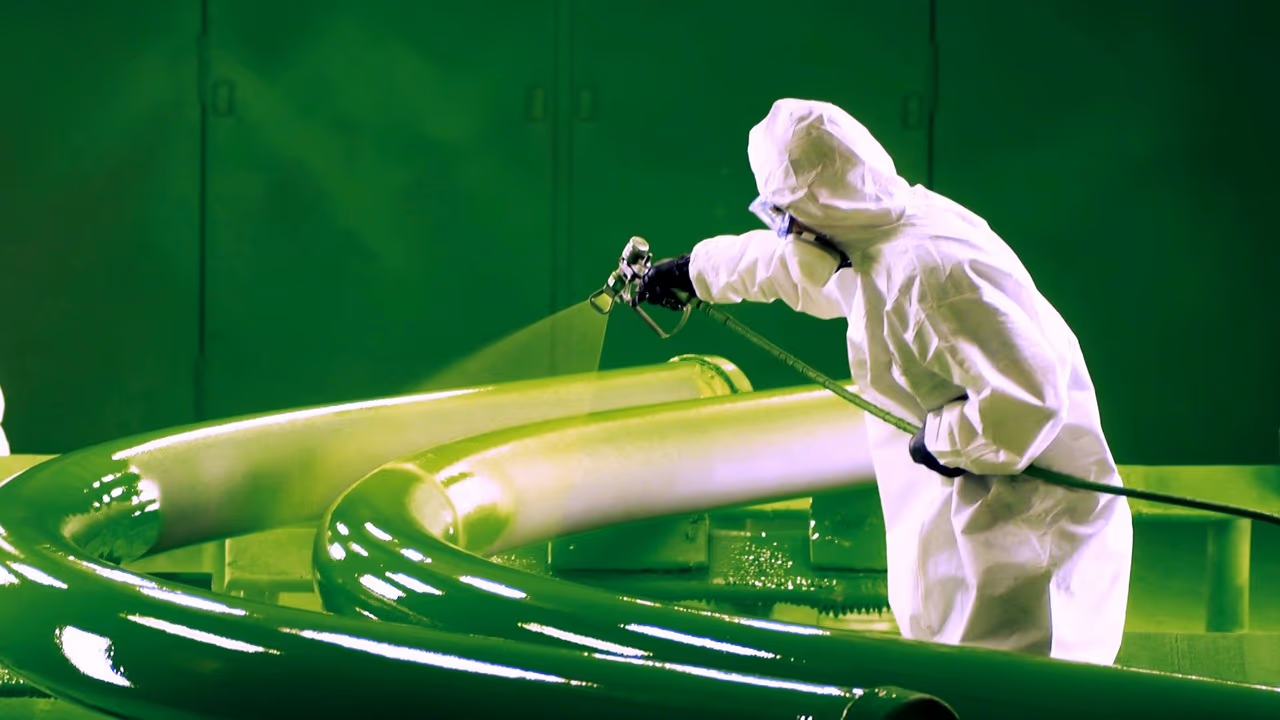 In-House Coating
Denso Protal 7200 · SP-2888
Liquid epoxy in a temperature-controlled booth, to CSA Z245.30.
Explore →
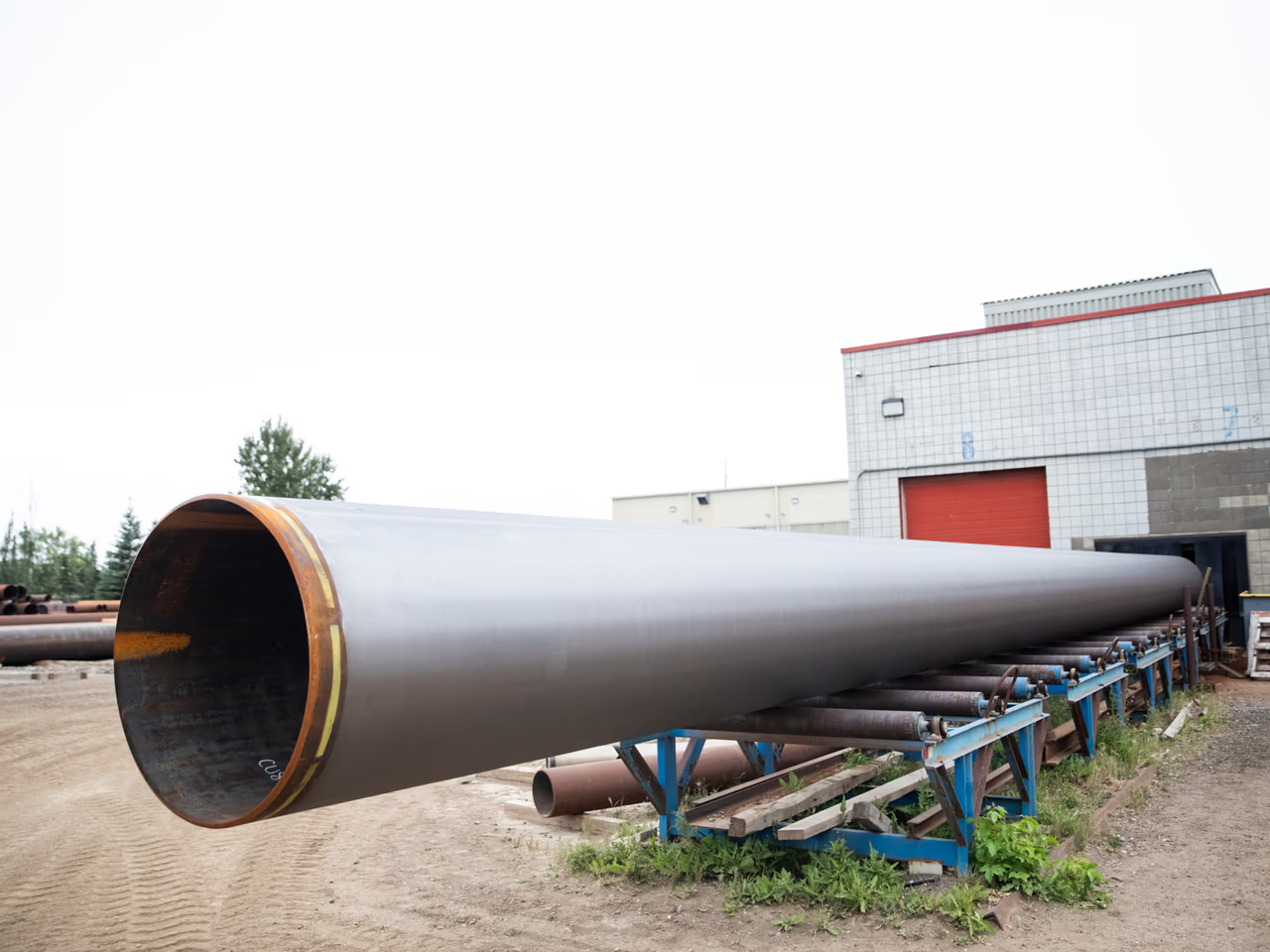 Blasting
1 manual booth · 2 automated machines · SSPC SP6 and SP10
One manual booth and two automated enclosed machines, with closed-loop grit recycling.
Explore →
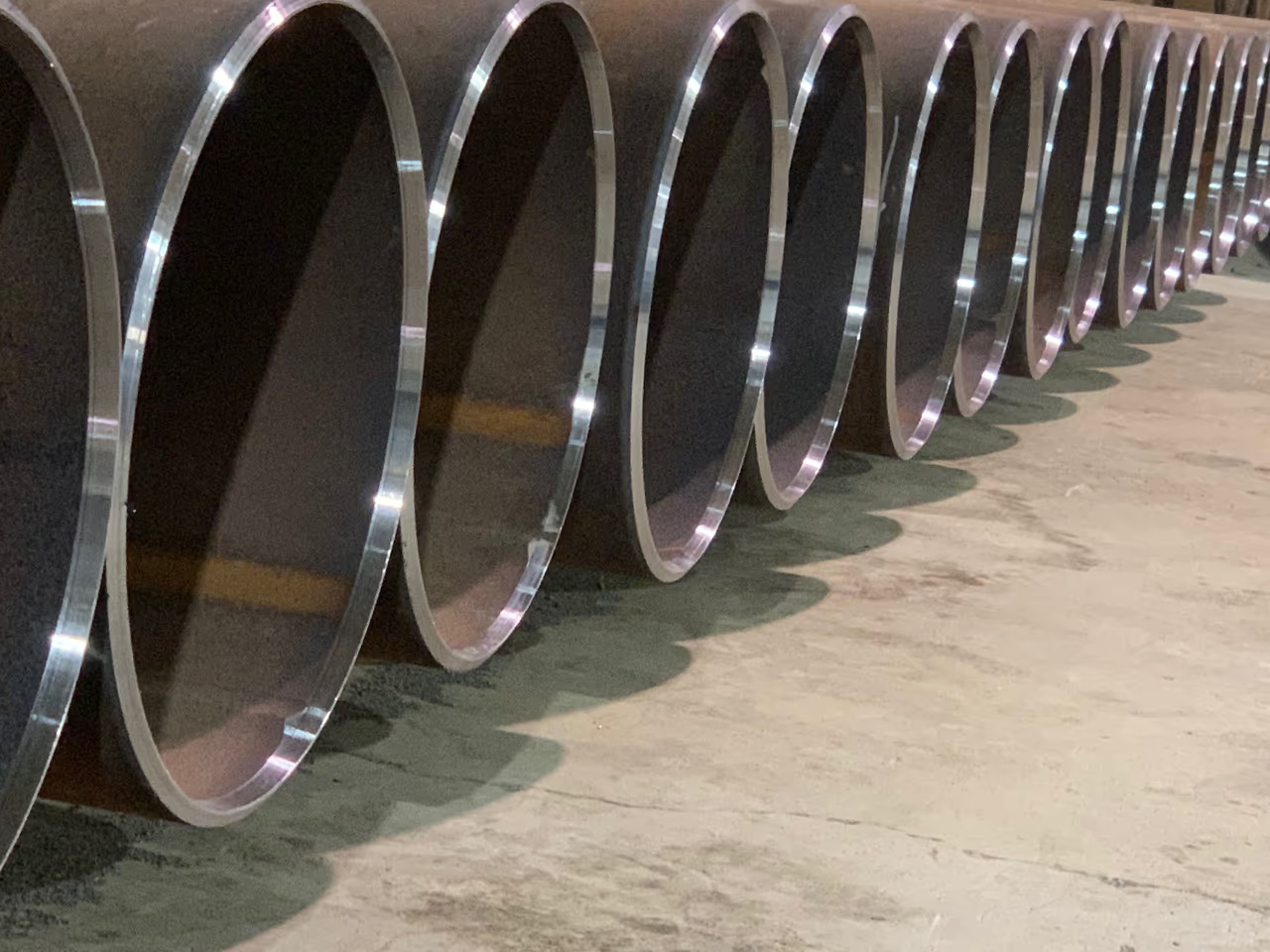 CNC Machining
Bevels · transitions · Victaulic grooves
Machined bevels, standard transitions, counterbore transitions and Victaulic grooves on a CNC boring mill.
Explore →
 By market instead?
Five markets since 1986
Oil & gas, power generation, architectural, manufacturing and municipal.
Markets we serve →
The paperwork ships with the steel.
Our in-house quality department scrutinises the job from inquiry through to load-out, and a dedicated destructive testing lab sits next door to the plant. The standard package includes bend reports, mill test reports, coating inspection reports and lab results. We put it together while the job runs instead of chasing it afterwards.
Benpro is ISO 9001 registered and COR certified for health and safety.
Questions we get on the phone.
What is the difference between induction bending and cold bending?
Induction bending heats a narrow band of the pipe with an induction coil and forms the bend through that hot zone, then quenches it. Cold bending forms the pipe at ambient temperature. Induction allows tighter radii and larger diameters; cold bending typically produces larger radii of 10D and above, and is well suited to already-coated pipe.
What is the largest pipe you can bend?
36" outside diameter on our induction machines, and 20" outside diameter cold. Maximum induction bend radius is 10 metres; on cold bends the maximum radius is limited only by the length of pipe supplied.
Can you bend pipe that is already coated?
Yes. Our cold decks routinely run YJ, YJ2K, UBRA and FBE coated pipe. Cold bending is the right process for pre-coated line pipe because the coating never sees bending temperature.
Can I supply my own material?
Yes. Customers regularly send us their own pipe, and we bend, treat, coat and machine it to their specification. We can also source material. Tell us which you prefer when you send the enquiry.
Do you bend for sour service?
Yes. Sour-service grades are routine work for us, and we bend to the hardness and testing requirements set out in CSA Z245.16 and CSA Z245.17. Confirm the grade and category on your enquiry and we will confirm the process and testing that go with it.
Is heat treatment available on its own?
Yes. Heat treatment is one service we actively take on for parts we did not bend. Our furnace runs to 680 °C and measures 5.4 m long by 3 m wide by 3.6 m high. Blasting, coating and CNC machining can also be quoted standalone.
Where do you ship?
Across Canada and the United States, including Alaska. We are based in southeast Calgary. If a job needs logistics arranged, we can handle that too.
How quickly will I get a quote?
Within one business day. Send diameter, wall thickness, radius or D-ratio, material grade, quantity, governing code and your target date, and we will come back with a number and a schedule.
Which CSA standard applies to my bends: Z245.11, Z245.16 or Z245.17?
Since August 2022, bends have had standards of their own: CSA Z245.16 covers induction bends and CSA Z245.17 covers cold bends. Both were previously inside CSA Z245.11, which still exists but now covers steel fittings rather than bends. If your specification still calls up Z245.11 for a bend, it is referencing a superseded requirement. That matters beyond the paperwork: the revised standards changed mechanical test requirements, hardness limits for sour service and Charpy specimen sizes. That changes what has to be tested, and therefore what a job costs. Tell us which standard your specification names and we will confirm the difference before you order.
Tell us what you need bent.
Send a drawing or just the numbers. We will respond within one business day.
2 induction machines
2 cold decks
1 manual blasting booth
2 automated blasting machines
1 heat treatment furnace
CNC boring mill
Destructive testing lab next door